Table of Contents
- Why Chainsaw Maintenance Matters for Beginners
- Your Beginner Chainsaw Maintenance Checklist
- How to Clean a Chainsaw Properly
- How to Oil a Chainsaw Chain and Check Oil Flow
- Sharpening, Tensioning and Checking Chain Wear
- Chainsaw Maintenance Tools Every Beginner Needs
- Troubleshooting Common Chainsaw Problems
- Conclusion
- Frequently Asked Questions
Last Updated: October 21, 2026
Why Chainsaw Maintenance Matters for Beginners
A chainsaw is the most dangerous tool most homeowners will ever pick up, and a neglected one multiplies that risk. Chainsaw maintenance is the routine care that keeps the saw cutting straight, starting easily and staying predictable under load.
Here’s the part most beginners get wrong. They treat maintenance as a repair task, something you do when the saw stops working. It isn’t. It’s a prevention routine, and it takes minutes rather than hours once you build the habit.
A dull chain is the classic example. It doesn’t just cut slowly; it forces you to push, which heats the bar, stretches the chain and wears the drive sprocket. One skipped sharpening becomes a parts bill.
Below, we’ll walk through exactly how to inspect, clean, oil and sharpen your saw, plus a schedule you can stick to.
Your Beginner Chainsaw Maintenance Checklist
The simplest way to stay on top of chainsaw maintenance is a frequency-based checklist. Split the work into before-use checks, after-use care and periodic servicing. The table below is a starting point, but your manual overrides it: fuel ratios, tension specifications and service intervals vary by model, so check the manufacturer’s figures before you rely on any generic interval.
|
Frequency |
Task |
Time Needed |
|---|---|---|
|
Before every use |
Safety shutdown check, chain tension, oil level, fuel, air filter, nuts and bolts, chain brake test |
3-5 minutes |
|
After every use |
Clean sawdust and debris, check oil flow, inspect chain, loosen chain if storing |
5-10 minutes |
|
Every few tanks of fuel |
Sharpen chain, clean guide bar groove, check wear limits, inspect drive sprocket |
20-30 minutes |
|
Seasonal or long storage |
Full service, fuel system flush, plug check, protective storage |
45-60 minutes |
Before Every Use
Run through this pre-use check every single time, even for a two-minute cut. Before you touch the chain, shut the saw down properly: release the throttle, engage the chain brake, switch the ignition off, and disconnect the spark plug lead on petrol models or remove the battery pack on electric and battery models. Wear protective gloves and safety glasses for any maintenance task, and never check tension or clear debris while the saw is running or the battery is connected.
- Check chain tension by lifting the chain from the bar; it should snap back with light resistance. Refer to your manual for the exact cold-tension specification, because it differs between models.
- Top up the chain oil reservoir and confirm the fuel level. On petrol saws, mix fuel to the ratio in your manual, not a generic ratio.
- Inspect the air filter for sawdust build-up and clean or replace it as needed.
- Check the bar nuts, muffler bolts and handles for looseness.
- Test the chain brake before starting: with the saw off, engage and release it to confirm it moves freely and locks the chain.
After Every Use
Post-use care is where beginners cut corners, and it’s where longevity is won. Shut down and secure the saw as above before cleaning.
- Brush sawdust and debris off the saw body, cooling vents and air filter housing.
- Wipe residue from the guide bar and check the oil inlet hole isn’t blocked.
- Loosen the chain slightly if the saw will sit unused for a while.
- Check the chain for damaged or missing cutters and inspect drive links for wear.
How to Clean a Chainsaw Properly
Cleaning a chainsaw means removing sawdust, dirt and oil residue from the air filter, cooling vents, guide bar groove and oil passages. Do it after every session, before debris hardens into place.
Close-up of a person wearing work gloves using a stiff brush to clear sawdust from the guide bar groove of a chainsaw resting on a timber workbench, with a can of compressed air and rags nearby
Follow these steps:
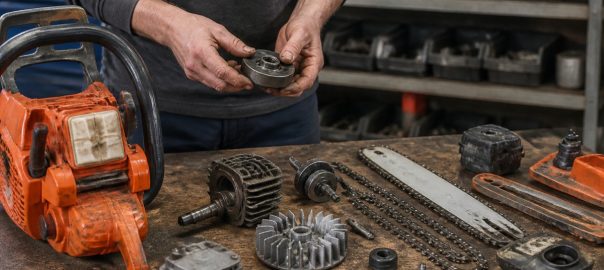
- Remove the bar and chain, then set them aside on a clean surface.
- Brush sawdust from the guide bar groove with a stiff brush or a thin scraper.
- Clear the oil inlet hole and oil outlet channel so lubrication can flow freely.
- Clean the air filter with warm soapy water or compressed air, and let it dry fully.
- Wipe the cooling fins and vents so the engine doesn’t overheat.
- Reassemble, checking the chain brake works before you restart.
A common mistake is blasting the whole saw with a pressure washer. Water forces dirt into bearings and the ignition system. Brush and air are safer.
How to Oil a Chainsaw Chain and Check Oil Flow
A chainsaw chain needs a constant supply of bar oil to reduce friction and heat. Fill the oil reservoir before each session and confirm oil is actually reaching the bar, not just sitting in the tank.
Checking flow takes seconds. Point the bar tip at a light-coloured surface, rev the saw briefly, and look for a fine spray of oil being thrown off. No spray means a blocked oil outlet channel, a clogged oil inlet hole or a failing oil pump.
Keep these points in mind:
- Use proper bar and chain oil, not engine oil or used sump oil
- Refill the oil reservoir every time you refuel; the two should run out roughly together
- Clean the oil outlet channel whenever you clean the bar groove
- In cold weather, oil flows more slowly, so check the spray more carefully
Sharpening, Tensioning and Checking Chain Wear
A sharp chain cuts fast with light pressure, throws chips rather than dust, and pulls itself through the timber. If you’re pushing the saw or seeing fine powder, it’s time to sharpen. Before sharpening, shut down the saw, engage the chain brake, disconnect the spark plug lead or remove the battery pack, and wear protective gloves and safety glasses.
Sharpen with a round file matched to your chain’s file gauge, holding the file at the angle specified for your chain type. Common chain pitches use different file sizes and angles, so check your manual or chain packaging rather than guessing: a mismatched file gauge ruins cutters quickly.
Tension matters just as much. A properly tensioned chain sits snug against the bar but can still be pulled around by hand with slight resistance. Check tension after the chain warms up, because it expands as it heats, and follow your manual’s cold-tension specification.
Chain wear has clear limits. Inspect for:
- Cracked or broken rivets
- Cutters worn down to the wear indicator marks
- A stretched chain that won’t stay tensioned
- A worn guide-bar groove that lets the chain rock side to side
- Damaged or worn drive links that no longer sit cleanly in the sprocket
When any of these appear, replace the chain or bar rather than pushing on. A worn drive sprocket accelerates chain wear, so check it whenever you fit a new chain.
Chainsaw Maintenance Tools Every Beginner Needs
You don’t need a workshop full of gear to keep a saw running well. A focused kit covers almost everything a beginner will face.
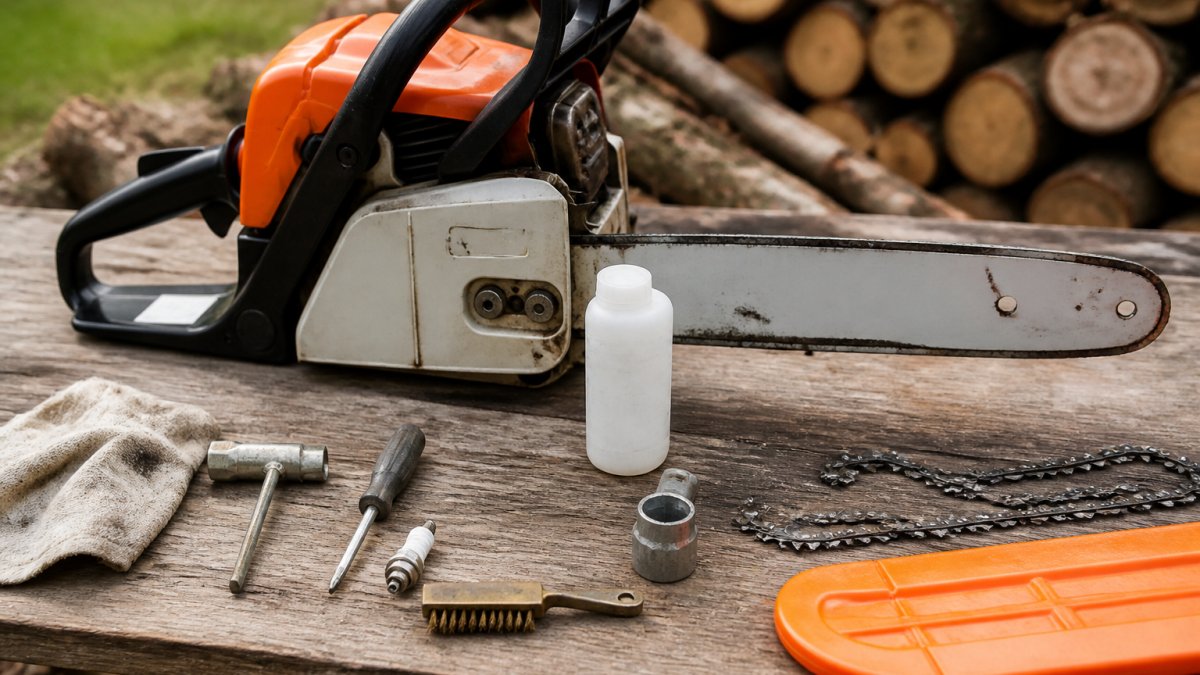
- Round file and file guide matched to your chain
- Depth gauge tool for cutter height
- Stiff brush and a small scraper for the bar groove
- Chain tension wrench or scrench
- Funnel for refuelling and oil top-ups
- Protective gloves and safety glasses for maintenance work
- Spare chain, spark plug and air filter
Buy the file and guide as a set for your specific chain size. A mismatched file gauge ruins cutters quickly.
Troubleshooting Common Chainsaw Problems
Most chainsaw faults trace back to a handful of causes, and beginners can diagnose them without a mechanic.
|
Symptom |
Likely Cause |
Fix |
|---|---|---|
|
Saw won’t start |
Old fuel, flooded engine, fouled spark plug |
Fresh fuel mix, clean plug, follow starting procedure |
|
Cuts slowly or throws dust |
Dull chain, incorrect depth gauge |
Sharpen chain, check depth gauges |
|
Chain comes off the bar |
Loose tension, worn sprocket, bent bar |
Retension, inspect sprocket and bar |
|
Bar and chain overheat |
Blocked oil outlet, empty reservoir |
Clear oil channel, refill oil |
|
Engine bogs down under load |
Clogged air filter, dirty fuel filter |
Clean or replace filters |
|
Excessive vibration |
Worn chain, damaged bar, loose mounts |
Replace worn parts, tighten mounts |
Work through the simplest cause first. Nine times out of ten, the answer is fuel, filtration or chain condition.
Electric and battery saws follow a different routine. They skip fuel mixture and spark plugs entirely, but chain tension, sharpening, oil flow and cleaning still apply. Battery models also need their contacts kept clean and their packs stored at moderate temperatures.
Conclusion
Keeping a chainsaw running safely comes down to a routine you repeat without thinking: check before use, clean after use, sharpen and tension as needed. That habit separates a saw that lasts a decade from one that fails mid-cut.
When parts do wear out, Chainsaws R US stocks an extensive range of new and recycled chainsaw parts, plus protective clothing as an authorised Clogger reseller, all shipped Australia-wide. We’re happy to help you match the right chain, file or bar to your saw. Get in touch with Chainsaws R US and keep your saw cutting straight.
Frequently Asked Questions
How often does a chainsaw chain need to be changed?
Change the chain when it reaches its wear limits rather than on a fixed schedule. Check the drive links for stretch: if the chain hangs loose off the bar with the tensioner maxed out, it is worn out. Also replace it when the cutting teeth have been filed back so far that the depth gauges no longer sit below the tooth tips, or when a file gauge no longer sits correctly. A well-maintained chain on a properly oiled bar can last many sharpening cycles, so regular chainsaw maintenance stretches its working life considerably.
How do you properly oil a chainsaw chain?
Fill the bar oil reservoir before every session and check the level each time you refuel. With the saw running at moderate speed, point the bar tip at a light surface and look for a fine spray of oil being thrown off. If nothing appears, clean the oil outlet channel and the oil inlet hole on the bar, and check the guide bar groove for packed sawdust. Never run the saw with an empty reservoir, even briefly, because the chain and bar wear rapidly without lubrication.
What maintenance should you do on a chainsaw after each use?
After every use, remove the bar and chain, clear sawdust and debris from the guide bar groove and oil inlet hole, and wipe down the housing. Check the air filter and clean or replace it if dirty, then inspect the chain for damaged or missing cutters. Refit the bar and chain, set the correct chain tension, and top up the bar oil if the saw will sit for a while. Store the saw with a near-empty fuel tank and run the engine dry if it will not be used for several weeks.
How do you know when a chainsaw chain needs sharpening?
The clearest sign is that the saw starts throwing fine dust instead of chips, and you have to push harder to keep cutting. The bar may also wander in the cut and the engine revs higher without the chain biting. Inspect the cutting teeth: if the tips are rounded, shiny or chipped, they need filing. Sharpen all teeth to the same angle with the correct file gauge, and check the depth gauges every few sharpenings so the chain keeps cutting efficiently.
Do electric and battery chainsaws need different maintenance?
The bar, chain and oiling routine is the same for electric and battery saws, so cleaning, tensioning and sharpening still apply. What changes is the power unit: there is no fuel mixture, spark plug or air filter to service. Instead, keep the battery contacts clean, charge according to the manufacturer’s instructions, and check the ventilation slots for sawdust. Battery saws still need bar oil checked before every use, because a dry chain wears out just as fast on an electric motor.