Table of Contents
- Why Hobbyists Need Proper Chainsaw Protection
- Understanding Chainsaw Protection Standards and Classes
- Chainsaw Protective Trousers: The Core of Leg Protection
- Chainsaw Helmet and Visor: Protecting Your Head and Face
- Chainsaw Protective Boots: Grip, Toe, and Sole Safety
- Gloves, Eye Protection, and Hearing Protection for Occasional Use
- Chainsaw PPE Maintenance: Inspection, Care, and Replacement
- Getting the Fit Right: Sizing and Compatibility Tips
- Frequently Asked Questions
Last Updated: October 22, 2026
Why Hobbyists Need Proper Chainsaw Protection
Choosing chainsaw protection for hobbyists comes down to one uncomfortable fact: occasional use is not low-risk use. A saw does not care that you only cut firewood twice a year. Kickback, chain contact and dropped timber happen on the first tank of fuel as readily as the hundredth, and the injuries that follow are severe and permanent.
This guide from Chainsaws R US exists because we field the same questions from weekend cutters, small-acreage owners and collectors: what do I actually need, what is overkill, and how do I know it fits?
Here is what most guides get wrong. They hand a hobbyist a professional arborist’s shopping list, the buyer balks at the total, and the saw gets used in shorts and sneakers instead. Buy the right five items, sized correctly, and you are covered for the work you actually do.
Understanding Chainsaw Protection Standards and Classes
In Australia, leg protection is tested and marked to AS/NZS 4453.3, the joint Australian and New Zealand standard for protective clothing for users of hand-held chainsaws. The standard sets out three protection classes, expressed as the maximum chain speed the garment’s protective layers can arrest:
- Class 1, rated to 20 metres per second
- Class 2, rated to 24 metres per second
- Class 3, rated to 28 metres per second
A hobbyist running a petrol saw with a standard bar and chain will usually find Class 1 adequate, because the chain speed at the bar nose on a typical domestic saw sits below that threshold.
Coverage is the second half of the label, and it is where most buyers stop reading. The standard distinguishes garment types by how much of the leg they shield. Front-only coverage protects the front of the thigh and shin.
What most buyers miss is that a higher protection class does not automatically mean a better garment for their situation. A higher-rated trouser carries more protective layers, which makes it heavier and warmer.
Helmets, visors and hearing protection carry their own markings. A forestry helmet should show compliance with the relevant head protection standard, the visor should be marked for impact rather than dust only, and ear defenders should state a noise reduction rating. None of these are chainsaw-cut ratings, so do not expect a class number on them, the label check is different for each category.
Chainsaw Protective Trousers: The Core of Leg Protection
Leg injuries dominate chainsaw accident statistics, which is why chainsaw protective trousers are the single most important purchase a hobbyist makes. The cut-resistant fabric works by feeding loose protective layers into the chain drive sprocket, jamming it before the chain reaches your leg.
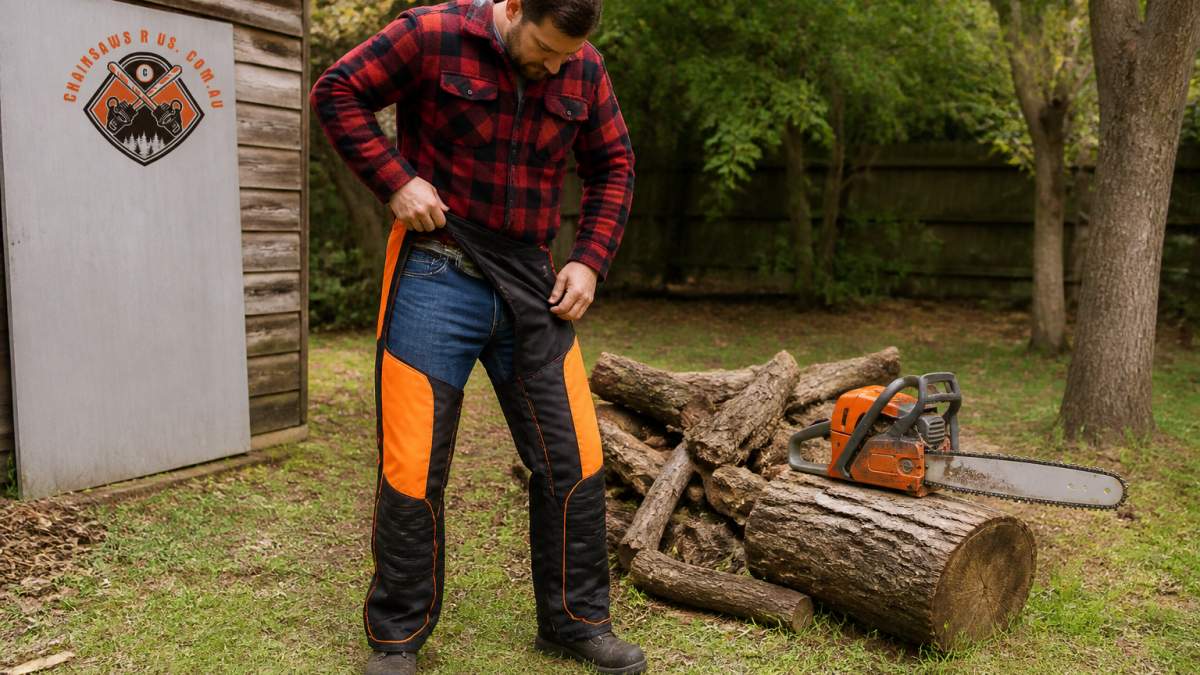
Look for high-denier outer fabric, reinforced fibres in the protective layers, and a design that stays put when you kneel or squat. Chainsaw chaps, which strap over your regular trousers, are a legitimate alternative for occasional ground work. They are quicker to put on and cooler in hot weather, but they leave the back of the leg exposed and they shift more as you move.
Type A vs Type C: Which Coverage Do You Need?
Type A chaps protect the front of the leg only. Type C protection wraps fully around the leg. For hobbyists cutting felled timber on flat ground, front coverage is usually adequate. Anyone limbing, working near the saw’s bar tip, or cutting in dense scrub should lean toward full-wrap protection, because chain contact from an unexpected angle is exactly the scenario front-only coverage does not address.
Chainsaw Helmet and Visor: Protecting Your Head and Face
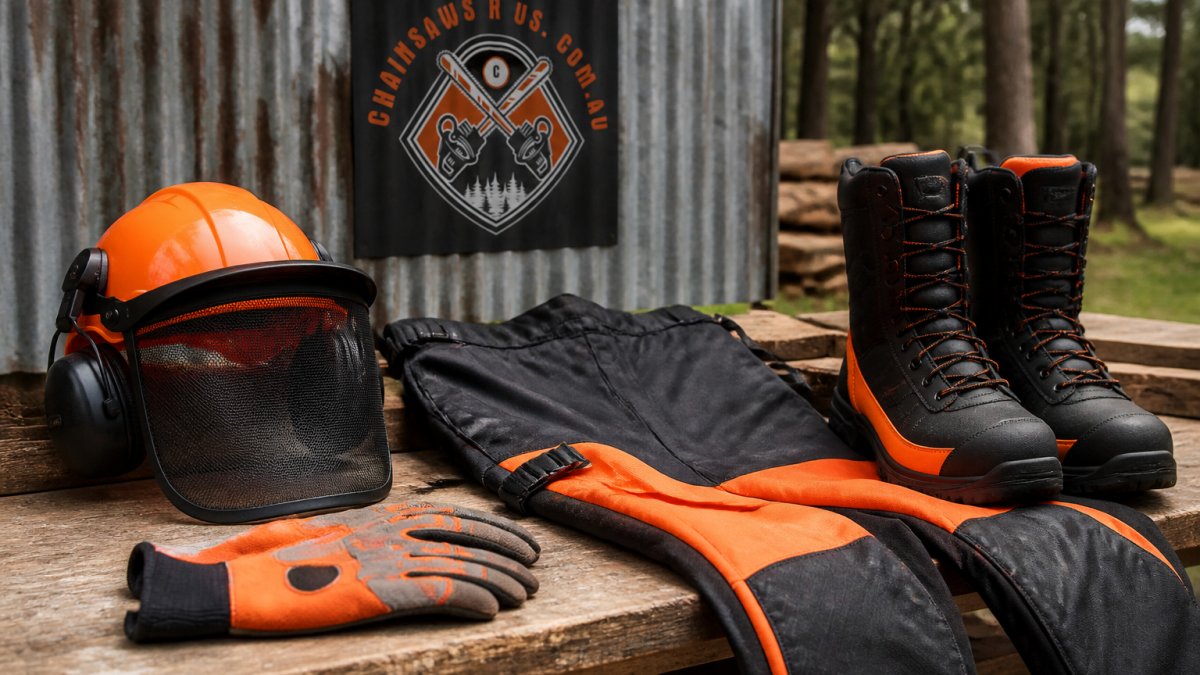
A chainsaw helmet and visor combination protects against three separate hazards at once: falling timber, flying debris, and the chain itself. The helmet shell handles impact, the mesh or polycarbonate visor blocks chips and sawdust, and the integrated ear defenders handle noise.
Buy a purpose-built forestry helmet rather than adapting a construction hard hat. Forestry helmets include a peak and a chin strap designed for the way you actually move around a saw. Check that the visor is rated for impact rather than just dust, and that the ear defenders attach to the helmet rather than sitting loose around your neck.
Fit matters here more than anywhere else. A helmet that rocks forward when you look down will have you pushing it back with a gloved hand every thirty seconds, and that is a distraction you cannot afford near a running chain.
Chainsaw Protective Boots: Grip, Toe, and Sole Safety
Chainsaw protective boots combine a hard toe cap with cut-resistant material across the instep and a slip-resistant sole. The instep protection is the part hobbyists overlook, and it is the part that matters when the saw kicks back and drops across the top of your foot.
Logging boots also need proper ankle support for uneven ground and a sole with enough tread to grip wet timber and loose bark. Avoid steel-capped boots from a general workwear range. They protect the toe but leave the instep completely exposed, which is the wrong trade-off for chainsaw work.
Gloves, Eye Protection, and Hearing Protection for Occasional Use
Chainsaw gloves need to balance cut resistance against dexterity, and for hobbyists the dexterity side usually wins. A glove that is too thick makes it hard to feel the saw’s controls, and a rider who cannot feather the throttle safely is at more risk than one with slightly less cut protection.
Look for a close-fitting arborist-style glove with a reinforced left hand, since that is the hand nearest the chain on most saws. For eye protection, safety glasses with a snug wrap beat a loose face shield for everyday cutting, though a shield is worth adding when you are working under a tree with debris falling. Ear defenders should carry a stated noise reduction rating and fit snugly over the ears without pressing on the helmet frame.
Chainsaw PPE Maintenance: Inspection, Care, and Replacement
Chainsaw PPE maintenance is straightforward, and skipping it is how protective gear quietly stops protecting. Cut-resistant fabric degrades with repeated washing, UV exposure and contamination from fuel and oil. Inspect your gear before every use, not once a season.
Check the following each time you head out:
- Trousers and chaps: look for frayed outer fabric, exposed or matted padding, and damaged straps or buckles
- Helmet: check the shell for cracks or deep gouges and confirm the visor still locks in place
- Ear defenders: confirm the seals are soft and undamaged, not hardened or split
- Gloves: check for worn patches on the palm and any cut-resistant fibres pulling loose
- Boots: inspect the sole for separation and the instep protection for tears
Wash protective clothing according to the manufacturer’s care label, which usually means cold water and no fabric softener. Never dry cut-resistant garments in a hot dryer. Replace any item that has taken a direct chain strike, even if the damage looks cosmetic, because the protective layers inside will have been compromised.
Getting the Fit Right: Sizing and Compatibility Tips
Fit is where most hobbyists get this wrong, and it is the difference between gear you wear and gear that stays in the shed.
Test the squat before you cut. With the garment on, squat fully and check that the knee padding stays over the knee rather than pulling up the thigh.
Layer deliberately. Chaps go over work trousers, not over shorts, and the straps should be adjustable enough to stay put as you move without cutting in.
Check helmet and eyewear compatibility. Your helmet’s ear defenders must clear your glasses frames without breaking the seal against your head.
Gloves should be snug at the fingertips. You need to feel the trigger and the chain brake through the glove.
At Chainsaws R US, we stock Clogger protective equipment as an authorised reseller, and sizing guidance comes with each product listing. If you are unsure which class suits your saw and your work, check the product page or get in touch before you order.
Frequently Asked Questions
Do hobbyists need chainsaw chaps or trousers?
For occasional chainsaw use, trousers are usually the better choice because they cover the full leg and stay in place while you move. Chaps offer similar cut protection but leave the back of the leg exposed, so they suit quick ground-work tasks. If you mostly cut firewood and clear fallen branches, a pair of Type A chainsaw protective trousers gives you reliable leg coverage without the fuss of straps and buckles.
What should I look for in chainsaw protective trousers?
Check the protection class and type first, then the fit. Type A covers the front of the leg and suits ground work, while Type C wraps further around for climbing tasks. Look for cut-resistant fabric with multiple protective layers, adjustable waist and leg openings, and breathable panels so you stay comfortable. Try them on over the trousers you normally wear and squat down to confirm the knee area does not pull tight.
Are chainsaw helmets and face shields necessary for occasional use?
Yes. Kickback and thrown debris do not care how often you use a saw. A chainsaw helmet and visor combination protects your head from falling limbs and your face from flying chips, and many helmets include built-in ear defenders. For hobbyists, an integrated helmet is simpler than buying separate pieces because everything stays together and is easier to inspect before each session.
How should chainsaw PPE fit and be maintained?
Fit should be snug but not restrictive, with no loose cuffs or hems that could snag on branches. For chainsaw PPE maintenance, brush off sawdust and sap after each use, check protective layers for cuts or fraying, and store gear dry and away from direct sun. Replace any item that has taken a direct chain contact, even if the damage looks minor. A 7-10 day turnaround on most orders means planning replacements before the season starts.
What type of gloves and boots are suitable for chainsaw work?
Chainsaw gloves need a balance of grip and dexterity, with cut-resistant material on the left hand where the chain is closest. Avoid loose gauntlets that can catch. For chainsaw protective boots, look for hard-toe protection, slip-resistant soles, and a snug laced fit. Steel-toe or composite-toe logging boots with ankle support work well on uneven ground, and they pair naturally with protective trousers that sit over the boot top.
How do I choose the right size of chainsaw protective clothing?
Measure your waist and inseam over the clothes you will wear under the protection, then check the manufacturer’s size chart rather than guessing. Chainsaw protective trousers should allow a full squat without the knee padding riding up. Helmets adjust with a dial or strap system, so pick one that sits level and does not tip forward. If you are between sizes, size up for trousers and adjust the waist, but keep gloves and boots true to fit.
Occasional cutting still demands proper protection, and the right gear is easier to buy than most hobbyists expect. Chainsaws R US supplies chainsaw protective trousers, helmets and visors, boots, gloves and hearing protection, backed by Australia-wide shipping and a range built for both professionals and weekend cutters. Start with leg protection, size it properly, and build out from there. Get started with Chainsaws R US and cut with gear you can trust.