Last Updated: October 23, 2026
Quick Summary
Finding chainsaw repair parts for older models starts with the model plate on the rear handle or crankcase, then matching both model and serial number against a parts diagram. Stihl, Husqvarna and Echo publish illustrated parts lists for discontinued models, the most reliable reference for superseded part numbers.
- Photograph the model plate and old part side by side before searching, because serial number ranges matter.
- A saw that will not idle usually needs a carburetor kit rather than a new carburetor.
- Buy aftermarket parts on condition, not price, since a cheap piston ring that does not seat can cost you a cylinder.
- Never fit a replacement chain without checking pitch, gauge and drive link count against the bar.
- A locked engine or scored cylinder on a saw with good plastics and a sound crankcase is usually worth fixing.
Table of Contents
- Chainsaw Model Number Lookup and Parts Compatibility
- Common Chainsaw Parts to Replace on Older Models
- Chainsaw Repair or Replace: Making the Call on an Older Saw
- Frequently Asked Questions
Chainsaw Model Number Lookup and Parts Compatibility
Finding chainsaw repair parts for older models starts with the model plate on the rear handle or crankcase. Match both model and serial number against a parts diagram before spending, identical-looking parts can differ in bore size, bolt spacing or crankshaft thread between production runs.
Stihl, Husqvarna and Echo publish IPLs (illustrated parts lists) for discontinued models, the most reliable reference for superseded part numbers.
Once you have the part number, verify stock via our guide on how to verify chainsaw part stock.
Common Chainsaw Parts to Replace on Older Models
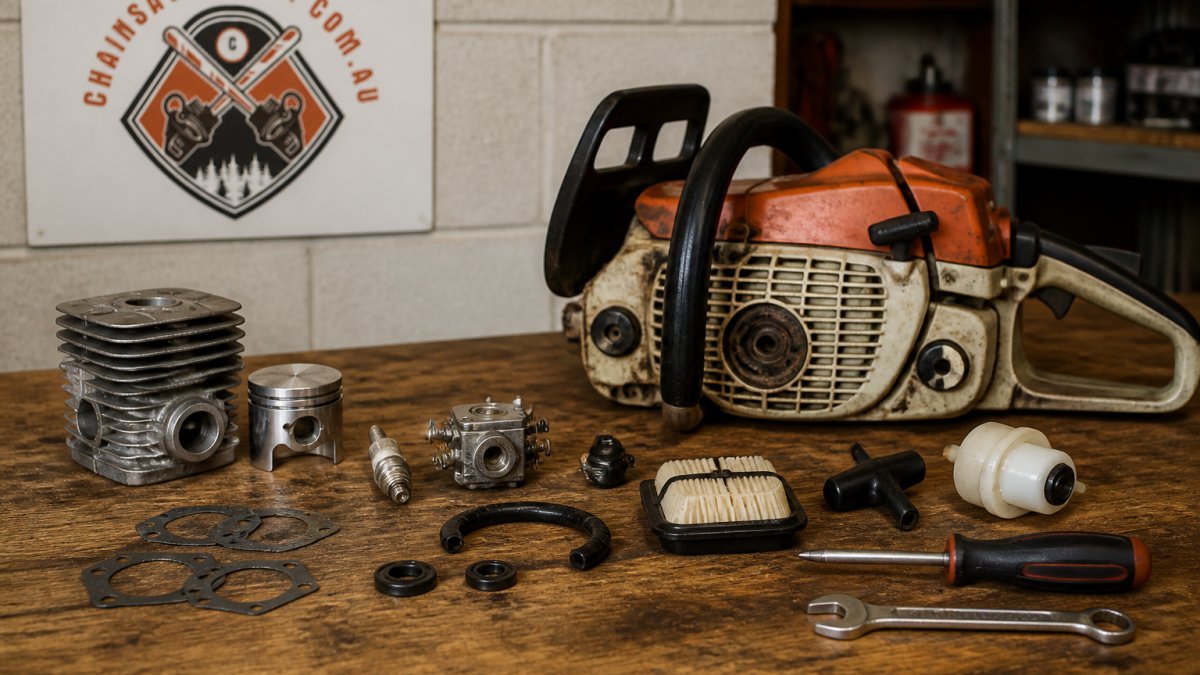
Older saws fail in predictable places. The fuel system tops the list: diaphragms harden with ethanol-blended fuel, fuel lines crack, and a saw that will not idle usually needs a carburetor kit rather than a new carburetor.
- Carburetor and fuel system: diaphragm kits, fuel lines, filters, primer bulbs
- Cylinder, piston and rings: scored pistons, worn rings causing low compression
- Guide bar and chain: worn rails, dry sprocket noses, stretched chains, mismatched pitch
- Sprockets, clutch and sharpening gear: worn clutch drums, slipping rim sprockets, dull files
Buy aftermarket parts on condition, not price: a cheap piston ring that does not seat will cost you a cylinder.
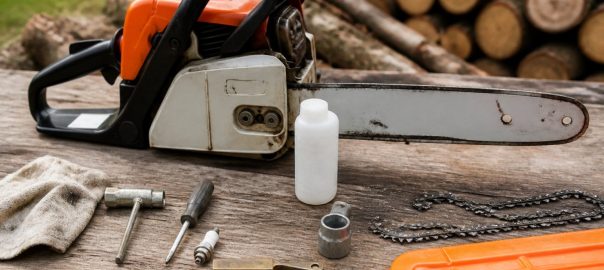
Never fit a replacement chain without checking pitch, gauge and drive link count against the bar. A chain that is close but not correct will run hot, jump the bar or damage the sprocket, and the damage often shows up mid-job rather than on the bench. ::: Precision in identifying correct parts prevents these mechanical failures and ensures that every component functions in harmony with the rest of the saw.
Older saws tend to fail in the same predictable places, so here is where to look first.
|
Part area |
What to check or replace |
|---|---|
|
Carburetor and fuel system |
Diaphragm kits, fuel lines, filters, primer bulbs |
|
Cylinder, piston and rings |
Scored pistons, worn rings causing low compression |
|
Guide bar and chain |
Worn rails, dry sprocket noses, stretched chains, mismatched pitch |
|
Sprockets, clutch and sharpening gear |
Worn clutch drums, slipping rim sprockets, dull files |
Chainsaw Repair or Replace: Making the Call on an Older Saw
The decision comes down to three tests: compression, parts availability and repair cost against the saw’s value. A locked engine or scored cylinder on a saw with good plastics, a straight bar and a sound crankcase is usually worth fixing; a cracked crankcase and no parts line left is not.
Ask before you commit: is the repair confined to one system, or is the whole saw tired? Will it cost more than a comparable used saw in working order?
For collectors, repair is the point rather than the economics. For a commercial operator, downtime is the real cost, and two major repairs in a season is telling you something.
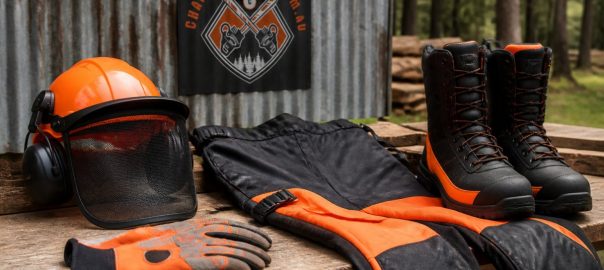
That is where a supplier who stocks hard-to-find and recycled parts earns their keep. Chainsaws R US carries an extensive range of new and recycled chainsaw parts with Australia-wide shipping, so a repair decision does not stall on a part you cannot source. We also supply safety equipment and protective clothing as an authorised Clogger reseller.
Frequently Asked Questions
Where can I find chainsaw repair parts for older models?
Start with the model and serial number stamped on the saw’s crankcase or rear handle. Use those details to search specialist parts suppliers that stock new and recycled components for older models, rather than generic hardware stores. Check that the seller lists your exact model and offers returns if the part does not fit. For discontinued items, recycled parts from a reputable supplier are often the only option, so ask about condition and warranty before ordering.
How do I know if a replacement part will fit my old chainsaw?
Match the part number from your saw’s IPL (illustrated parts list) or service manual against the seller’s listing. Where part numbers have been superseded, confirm the replacement number covers your model and serial range. For chains and bars, check pitch, gauge and drive link count as well as bar length. If the listing is vague, ask the seller to confirm compatibility with your exact model before you buy.
Is it worth repairing an older chainsaw or should I replace it?
Repair usually makes sense when the saw has good compression, a sound crankcase and the repair cost is a fraction of a new equivalent. If the cylinder is scored, the crankcase is cracked or multiple major components are worn, replacement may be more economical. Get a quote for the parts first, then compare against the cost of a new saw with a warranty. For vintage or collectible models, restoration value can outweigh pure economics.
Older saws rarely die all at once. They fail one system at a time, and the owner who can identify the model, verify compatibility and judge a repair honestly keeps a good saw running for years. If you are weighing up a repair and need to know what is actually available, browse the parts range at Chainsaws R US and get the saw back to work.