Last Updated: November 12, 2026
Quick Summary
A professional arborist gear checklist in 2026 must confirm every item is fit for purpose, compliant with Australian standards, and inspected before each climb. Build your arborist gear by function: head-to-toe PPE, climbing systems, cutting tools, documented inspections and a trauma-focused first aid kit.
- Chainsaw trousers are the single most important clothing item for anyone running a saw.
- Most practitioners find a monthly detailed inspection of ropes, harnesses, lanyards and connectors works well.
- Retire helmets after any significant impact and on the manufacturer’s stated service life.
- Keep a log recording each item’s identifier, purchase date, inspection dates and retirement date.
- Carry a trauma-focused first aid kit with tourniquet, eye wash and burn dressings, and rehearse a rescue plan.
Table of Contents
- What a Professional Arborist Gear Checklist Must Cover in 2026
- The Arborist PPE Checklist: Head-to-Toe Protection
- The Arborist Climbing Gear List: Harness, Ropes and Hardware
- Cutting and Ground Tools: Chainsaws, Saws and Pruners
- The Arborist Equipment Inspection Checklist and Recordkeeping
- Your Arborist First Aid Kit and Emergency Response Gear
- Mandatory, Recommended and Optional: Building Your Kit by Task
- Choosing Your Arborist Gear Setup at Chainsaws R US
- Frequently Asked Questions
What a Professional Arborist Gear Checklist Must Cover in 2026
A professional arborist gear checklist in 2026 has to do more than list equipment.
Tree work is unforgiving. A single compromised carabiner or a worn chainsaw trouser leg can turn a routine removal into a serious incident.
Below, we break down the full arborist gear setup, from head-to-toe protection to the first aid kit that should never leave the ute.
The Arborist PPE Checklist: Head-to-Toe Protection
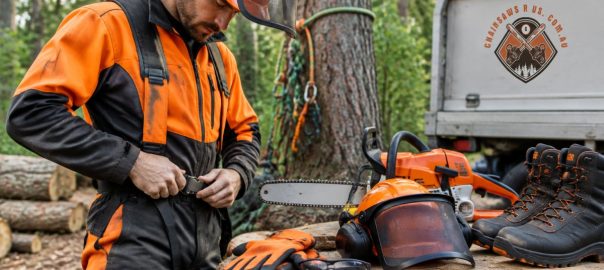
Personal protective equipment is the first layer of defence in any tree work operation. An arborist PPE checklist should cover the head, eyes, ears, body, hands and feet, because chainsaw injuries rarely affect just one area.
Helmets, Eye and Hearing Protection
A forestry helmet combines a hard shell, a mesh or polycarbonate face shield and integrated earmuffs. Look for a helmet that is marked as meeting the relevant protective helmet standard and is compatible with your face shield and ear defenders. Replace any helmet that has taken a significant impact, even if no visible cracks appear. Eye protection should be rated for impact, and hearing protection should carry a class rating suited to chainsaw noise levels.
Chainsaw Trousers, Boots and Gloves
Chainsaw trousers are the single most important clothing item for anyone running a saw. They rely on layers of protective fabric that jam the chain on contact, so fit matters: too loose and the protection shifts, too tight and you lose mobility. For a deeper comparison of trousers and boots, our guide to chainsaw safety clothing covers the options in detail, and our breakdown of chainsaw safety gear for tree surgeons helps you match each item to the task.
The Arborist Climbing Gear List: Harness, Ropes and Hardware
A complete arborist climbing gear list centres on four things: a work-positioning harness, a climbing rope and rope system, connectors and hardware, and a flipline or lanyard. Each component must be rated for tree work and compatible with the others.
Start with the harness. A tree-climbing harness should distribute load across the waist and legs, include attachment points for a flipline and lanyard, and fit well enough that you can hang comfortably for extended periods.
Fliplines, Lanyards and Pole Straps
A flipline or lanyard adjuster lets you reposition around the stem while staying attached. Pole straps and hitch cords, including prusik loops, should be inspected for wear at the splice and sheath. Compatibility matters here: a lanyard adjuster that does not suit your rope diameter is a hazard, not a convenience. Build the system as a set, and test every connection at ground level before you leave the deck.
Cutting and Ground Tools: Chainsaws, Saws and Pruners
Cutting tools do the work, so they deserve the most scrutiny. A professional kit typically includes a chainsaw for removals and larger pruning, a pruning saw for tight access, loppers for smaller limbs, and a pole pruner for reach without climbing.
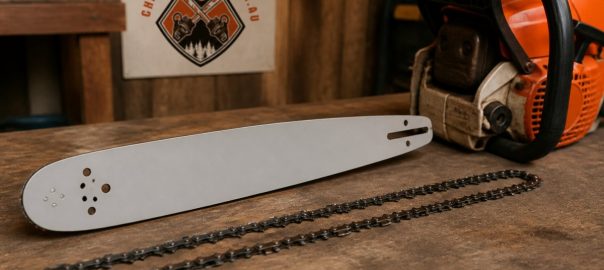
Chainsaw maintenance is not optional. Our chainsaw maintenance tips for beginners walk through the routine that keeps a saw reliable, while our advice on chainsaw bar and chain replacement explains when a worn bar or stretched chain is costing you clean cuts.
The Arborist Equipment Inspection Checklist and Recordkeeping
An arborist equipment inspection checklist is a written routine that records the condition of every load-bearing and protective item before use. Inspection is not a memory exercise; it is a documented habit, and in 2026 the crews that stay ahead treat it as a three-tier system: pre-use checks, periodic detailed inspections, and a retirement decision backed by records.
Pre-Use Checks (Before Every Climb)
Run through this before each job:
- Check harness webbing and stitching for cuts, fraying and UV damage
- Inspect ropes along their full length for glazing, flat spots and contamination
- Confirm carabiners and connectors operate smoothly and show no cracks or corrosion
Periodic Detailed Inspections
Pre-use checks catch obvious damage, but they do not replace a closer look. Most practitioners find a monthly detailed inspection of climbing ropes, harnesses, lanyards and connectors works well, with a full documented review at least annually or after any incident, near-miss or suspected overload. During a detailed inspection, run the rope through your hands under light tension and look for:
- Glazing or hardening where the rope has run over a branch or through a device
- Flat spots or soft sections that suggest core damage under an intact sheath
- Sheath slippage at the splice or termination
For hardware, check that carabiner gates open and close fully, that the gate spring is not weak, and that there is no corrosion pitting or wear groove at the rope-bearing point. For helmets, look for cracks, deep scratches, and degraded foam or suspension, and confirm the face shield and earmuffs still attach securely.
Retirement Thresholds
Retirement is where most checklists stop short. A common pattern is to retire any textile item, rope, sling, lanyard, hitch cord, that shows sheath damage exposing the core, glazing over a significant length, contamination that cannot be cleaned out, or a history of shock loading.
Watch out: a rope that looks clean on the outside can hide core damage, so never rely on a visual pass alone for a rope that has taken a fall or run over a sharp edge.
Recordkeeping That Actually Works
Keep a simple log of service history so you can trace when gear was purchased and when it was last inspected. A practical record captures the item, its unique identifier or serial number, purchase date, inspection dates, inspector, condition notes and retirement date.
An equipment bag and rope bag also protect gear in transit, which extends service life and makes inspection easier. Store ropes away from fuel, solvents and direct sunlight, and never store a wet rope in a sealed bag.
Your Arborist First Aid Kit and Emergency Response Gear
An arborist first aid kit should be stocked for the injuries tree work actually causes: chainsaw lacerations, falls, eye injuries and crush injuries. A basic kit is not enough for a climbing crew.
Carry a trauma-focused kit with heavy wound dressings, tourniquet, eye wash, burn dressings and gloves, plus a means of summoning help from height. A rescue plan matters as much as the kit: know how you would get an injured climber down, and rehearse it.
Mandatory, Recommended and Optional: Building Your Kit by Task
Not every item is essential for every job. Build your kit by task so you carry what the work demands without hauling gear you do not need, but treat the task list as a starting point, not a substitute for checking that the items work together as a system.
| Task | Mandatory | Recommended | Optional |
|---|---|---|---|
| Climbing and pruning | Harness, rope, flipline, helmet, eye and hearing protection | Prusik and hitch cord set, rope bag | Spare lanyard |
| Removals | Chainsaw trousers, boots, gloves, full PPE | Pole pruner, rigging hardware | Extra ground tools |
| Ground work | Helmet, eye and hearing protection, gloves, boots | Tool lanyard, loppers | Pole pruner |
| Emergency readiness | First aid kit, rescue plan | Spare rope, throw line | Burn dressings |
Compatibility and System-Level Setup
The table tells you what to pack; compatibility tells you whether it will work. A climbing system is only as safe as the weakest connection, and the most common compatibility failures are mismatches between rope diameter and the devices or adjusters designed to grip it.
- Rope and hitch cord: A hitch cord must suit the diameter of the rope it grips. A prusik loop that is too large for the host rope will not bite reliably; one that is too small can be difficult to release under load.
- Rope and mechanical adjusters: A lanyard adjuster or mechanical device must be rated for the rope diameter and construction specified by its manufacturer. A device that does not suit your rope diameter is a hazard, not a convenience.
- Harness and connectors: Attachment points, bridge and lanyard connections must be matched to the connectors you use, and every connector must be rated for the load direction it will see.
Build the system as a set, and test every connection at ground level before you leave the deck. Follow the manufacturer’s instructions for each component, and do not mix components from different systems unless the manufacturers confirm compatibility.
Task-Specific Packing Notes
- Climbing and pruning: Carry your hitch cord set and a spare lanyard, and confirm your rope bag keeps the working end clean and untangled.
- Removals: Rigging hardware adds weight and complexity, so plan the rigging system before you climb and confirm every connector and sling is rated for the loads you expect.
- Ground work: A tool lanyard keeps dropped equipment from becoming a hazard to the climber and ground crew.
For hobbyists scaling up, our guide to choosing chainsaw protection for hobbyists explains which protection levels suit non-professional use.
Choosing Your Arborist Gear Setup at Chainsaws R US
At Chainsaws R US, we stock new and recycled chainsaw parts, protective clothing and site safety products, with Australia-wide shipping.
Whether you are a professional arborist or a hobbyist, the right gear setup starts with a checklist you actually use. Browse our range and build your kit one task at a time.
The difference between a safe crew and a lucky one is usually a checklist.
Frequently Asked Questions
What gear does a professional arborist need?
A working arborist gear setup covers four areas: personal protective equipment (helmet with face shield and earmuffs, chainsaw trousers, chainsaw boots, gloves), a climbing system (harness, climbing rope, flipline or lanyard, carabiners and connectors), cutting tools (chainsaw, pruning saw, loppers, pole pruner) and support items such as a first aid kit, rope bag and inspection records. Ground crew need the same protective clothing plus rigging gear. Build the kit around the tasks you actually perform, then add specialist items as your work expands.
What PPE should an arborist wear for chainsaw work?
At minimum: a forestry helmet with integrated face shield and hearing protection, chainsaw-resistant trousers, chainsaw boots with cut protection and ankle support, and grip gloves. Eye and hearing protection should be worn whenever the saw is running, even during short cuts. Check that protective clothing is rated for the saw you use and that it still fits correctly, because loose or worn garments reduce the protection they offer. Replace any item showing cuts, tears or stretched-out elastic.
How often should arborist climbing gear be inspected?
Inspect climbing gear visually before every use, checking ropes for glazing, cuts and core damage, and hardware for cracks, corrosion and correct function. A more detailed documented inspection should happen at regular intervals set by your employer or procedure, and always after any fall, impact or suspected damage. Retire gear immediately if it fails inspection or shows signs of wear beyond the manufacturer’s limits. Keep a written record of each inspection with dates, findings and the inspector’s name.
What should be included in an arborist first aid kit?
A tree-work first aid kit should cover trauma and remote-site needs: heavy bleeding control dressings, tourniquet, burns dressings, eye wash, splinter and wound care items, instant cold packs, a space blanket, heavy-duty gloves and a whistle. Add a personal medication supply, insect sting treatment and a written emergency plan with site access details. Carry the kit on the ground within reach of the climber, not locked in a vehicle, and check expiry dates every few months.
What is the difference between climbing and rigging equipment?
Climbing equipment supports the arborist’s body weight and is rated for life safety: harness, climbing rope, lanyard, flipline and connectors. Rigging equipment handles loads such as cut limbs and tree sections: rigging ropes, blocks, slings and lowering devices. Never mix the two systems. A rigging rope used to lower timber should not then be used as a climbing line, because shock loading and abrasion can damage it in ways that are hard to see.
What should an arborist check before starting a job?
Run through a pre-start check covering the site and the kit. On site: hazards, powerlines, overhead structures, escape routes and a rescue plan. On the kit: inspect ropes and hardware, confirm the chainsaw starts and cuts cleanly, check chain tension and sharpness, and make sure PPE is intact and correctly fitted. Confirm the first aid kit is stocked and accessible, and that your inspection records are current before the saw is started.