Last Updated: November 19, 2026
Quick Summary
Chainsaws R US is a chainsaw parts online store in Australia that stocks new and recycled chainsaw parts with Australia-wide shipping. Before ordering, confirm your saw’s model and serial number, bar and chain specifications, and whether the seller holds the part in stock. Send your model and serial details so fitment can be confirmed against the parts diagram.
- Photograph the model plate and note model number, serial number, bar length and bar pitch before searching.
- Bar and chain fitment depends on pitch, gauge and drive link count, so check the stamp on the old bar.
- Ask any aftermarket listing who manufactures the part and what specification it meets.
- Under Australian Consumer Law, a part that does not fit the model it was sold for entitles you to a remedy.
- Compare stores by pricing three common parts including freight to your postcode, then check stock and returns.
Table of Contents
- What to Check Before Buying Chainsaw Parts Online
- Chainsaw Parts by Model: Getting the Fitment Right
- Aftermarket Chainsaw Parts: What You Gain and What to Watch
- Recycled Chainsaw Parts: Buying Used Components with Confidence
- Chainsaw Bar and Chain: Matching the Cutting Gear to the Saw
- Comparing Online Stores: Range, Stock Accuracy and Delivery
- Shipping, Returns and Your Consumer Rights
- Ordering Your Parts from Chainsaws R US
- Frequently Asked Questions
What to Check Before Buying Chainsaw Parts Online
Buying chainsaw parts online in Australia works well once you confirm three things before paying: the exact model and serial number of your saw, the bar and chain specifications, and whether the seller actually holds the part in stock.
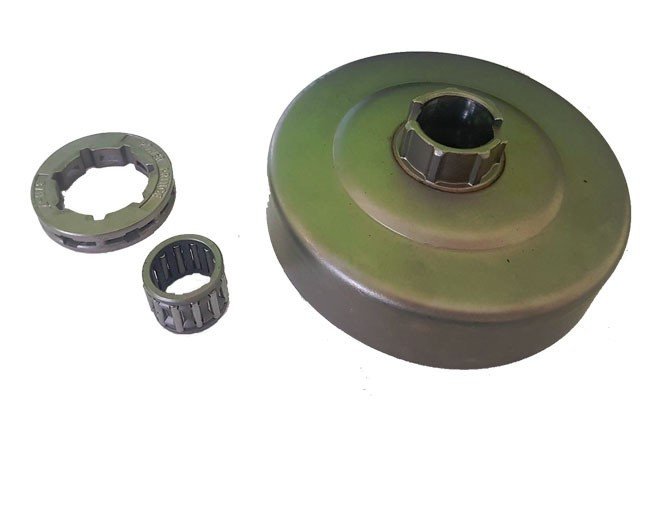
Start with the saw itself, not the website. A part that looks identical in a photo can differ by a millimetre in mount pattern or by one tooth in drive count, and that difference is the whole job.
Model and serial number lookup
Every saw carries a model plate, usually near the rear handle or under the sprocket cover. Photograph it before you search.
Write down four details: model number, serial number, bar length in centimetres, and the pitch stamped on the bar. With those four, most compatibility questions answer themselves.
Bar and chain compatibility
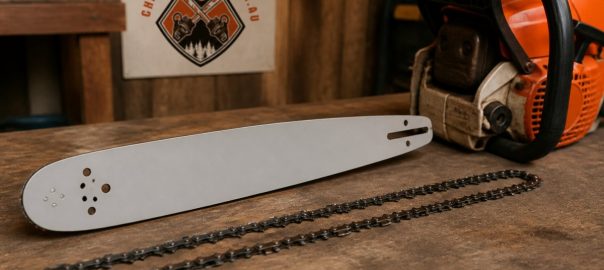
Bar and chain compatibility comes down to three numbers: pitch, gauge, and drive link count. Pitch is the distance between drive links, gauge is the width of the groove the links run in, and drive link count is how many links the chain carries.
Get any one wrong and the chain either won’t seat or will run loose and chew the bar. Check the stamp on the old bar, not the saw’s manual, because bars get swapped over a machine’s life.
Chainsaw Parts by Model: Getting the Fitment Right
The single biggest cause of wrong-part orders is shopping by brand instead of by model.
Model fitment is where an experienced seller earns their keep.
Watch out: some listings show a “fits” list built from a generic database rather than the manufacturer’s own parts diagram.
When you enquire, give the seller your four details and ask them to confirm against the parts diagram.
Aftermarket Chainsaw Parts: What You Gain and What to Watch
Aftermarket chainsaw parts are components made by a third-party manufacturer rather than the saw’s original brand.
What most guides miss is that aftermarket is not one category.
For high-wear consumables like chains, filters and spark plugs, a good aftermarket part is a sensible buy.
Ask two questions of any aftermarket listing: who manufactures it, and what specification does it meet. If the page answers neither, keep looking.
Recycled Chainsaw Parts: Buying Used Components with Confidence
Recycled chainsaw parts suit two buyers especially well: collectors restoring older machines and anyone keeping a discontinued saw running. Availability is the reason. Genuine new stock for a saw from the 1990s often no longer exists.
Reliability comes down to inspection. A used part is a good buy when it shows even wear, clean threads, no corrosion pitting, and no signs of heat damage or previous repair.
Ask for close-up photos of the specific component, not a stock image. Our guide to the signs recycled chainsaw parts are actually reliable walks through exactly what to look for. If you are still weighing up whether a used part makes sense for an older saw at all, read whether used parts for old chainsaws are worth it before you commit.
Watch out: recycled electrical components such as coils and modules can test fine cold and fail once warm. Ask whether the part was tested under load, not just for continuity.
Chainsaw Bar and Chain: Matching the Cutting Gear to the Saw
A matched bar and chain is the difference between a saw that cuts straight and one that wanders, binds, or overheats.
Three specifications decide fitment:
- Pitch: the distance between drive links, commonly 3/8, 3/8 low profile, or 0.325
- Gauge: the groove width, commonly 1.3 mm, 1.5 mm, or 1.6 mm
- Drive links: the link count that matches your bar length
Buying bar and chain as a matched set removes the guesswork entirely. You can browse matched bar and chain combos sized to your saw rather than assembling the two separately and hoping they agree.
Three specifications decide whether a bar and chain will fit your saw.
| Specification | What it is | Common values |
|---|---|---|
| Pitch | Distance between drive links | 3/8, 3/8 low profile, 0.325 |
| Gauge | Width of the groove the links run in | 1.3 mm, 1.5 mm, 1.6 mm |
| Drive links | Link count that matches bar length | Matches your bar length |
Comparing Online Stores: Range, Stock Accuracy and Delivery
Most parts pages tell you what they sell. Very few help you compare one seller against another on the things that actually decide whether an order goes smoothly. The gap in the market is a transparent comparison framework, so here is one you can apply to any store, including us.
Range depth
A store that only carries chains and bars will send you elsewhere the moment you need a coil, a carburettor kit or a sprocket bearing. Check whether the catalogue covers the whole saw: cutting gear, drive components, fuel-system parts, filters, and engine components. If you run brushcutters or trimmers as well, check whether those parts sit in the same catalogue or a separate one with separate freight rules.
Stock accuracy
Availability shown per item is the minimum. Better stores confirm stock before dispatch and tell you if an item is backordered rather than letting the order sit silent. If you want a repeatable method, our step-by-step guide to verifying chainsaw part stock shows how to confirm availability before you pay.
Delivery coverage and cost
Metro delivery is table stakes. The question is whether the store ships to regional and remote addresses without surcharges that wipe out the saving, and whether it states freight costs before checkout rather than at the payment step. Check the dispatch cut-off time too: a part ordered Friday afternoon that ships Monday costs you a weekend on a job.
Returns and wrong-fit handling
Confirm the return window, who pays return freight on a wrong-fit part, and whether special-order or cut-to-length items (chain rolls, made-up loops) are excluded. A store that publishes this clearly is usually easier to deal with than one that hides it in a policy page.
Payment and support
Look for the payment methods you actually use, and check whether support is reachable by phone or email during business hours. A parts counter that can read a parts diagram back to you is worth more than a chat widget that cannot.
Indicative price context
Pricing depends on quantity, dates and delivery, so check Chainsaws R US’s website for current prices or request a quote. Comparing a basket of common parts across two or three stores is more useful than comparing a single discounted item, because freight and minimum-order rules often reverse the headline saving.
A practical comparison method
Pick the three parts you are most likely to need this season, price them at each store including freight to your postcode, check stock status and return terms for each, then compare the totals. That dated sample basket is a more honest comparison than any “we’re cheapest” claim, and it takes about ten minutes.
Shipping, Returns and Your Consumer Rights
Delivery speed matters most when a job is waiting, but the fine print on returns and your statutory rights matters more when something goes wrong. This is the section most store pages skip, so here is how it works in practice.
Shipping expectations
Reputable sellers dispatch promptly and tell you upfront if an item is backordered rather than letting the order sit silent. Check the dispatch cut-off, the freight cost to your postcode before checkout, and whether regional and remote addresses attract surcharges. If a job is waiting, ask whether the part is on the shelf or being ordered in, because that difference can be a week.
Returns: what to confirm before ordering
Before you pay, confirm four things: the return window, who pays return freight on a wrong-fit part, whether special-order items are excluded, and whether cut-to-length products such as chain rolls or made-up loops can be returned at all. A store that publishes these terms clearly is usually easier to deal with than one that hides them.
Watch out: a “change of mind” return policy is a store policy, not a legal right. If you ordered the wrong pitch or gauge, the store may refuse the return or charge freight both ways, so confirm fitment before ordering.
Your rights under the Australian Consumer Law
Your rights sit above any store policy. Under the Australian Consumer Law, products must be of acceptable quality, fit for their described purpose, and match their description (Consumer rights and guarantees).
The remedy depends on whether the failure is major or minor. For a major failure you can choose a refund or replacement, or keep the item and seek compensation for the drop in value (Repair, replace, refund, cancel).
How this applies to parts specifically
Fitment disputes are the common friction point. If a listing said a part fits your model and serial range and it does not, that is a “match description” and “fit for purpose” issue, not a change-of-mind return. Keep the listing screenshot and your model and serial details, because they are your evidence.
Warranty versus consumer guarantees
A manufacturer’s warranty sits alongside your consumer guarantees, not above them. A warranty cannot cut down your statutory rights, and a store cannot make a warranty claim the only route to a remedy.
The consumer rights guide for faulty power tools explains how those protections apply in practice, including how to frame a claim so the seller understands you are invoking your statutory rights rather than asking a favour.
A simple pre-order checklist
Confirm the return window, who pays return freight on a wrong-fit part, and that the listing names your model and serial range.
Ordering Your Parts from Chainsaws R US
Chainsaws R US stocks new and recycled chainsaw parts and offers Australia-wide shipping. We are an authorised Clogger reseller.
Our range includes new and recycled chainsaw parts, alongside protective clothing and site safety products.
The gap between a smooth repair and a stalled project is usually one unconfirmed specification.
Frequently Asked Questions
Where can I buy chainsaw parts online in Australia?
Several Australian online stores stock chainsaw parts, ranging from aftermarket specialists to dealers for major brands. Look for a store that lists stock levels, ships Australia-wide, and states its returns policy clearly. Chainsaws R US stocks new and recycled chainsaw parts and ships across the country, while brand dealer locators help if you want genuine parts fitted locally. Check model fitment before ordering to avoid return freight costs.
How do I find the right parts for my chainsaw model?
Start with the model and serial number on the saw’s housing or under the cover. Use those numbers to search chainsaw parts by model rather than guessing from photos. For cutting gear, note the bar length in centimetres, the chain pitch and gauge, and the drive link count stamped on the old bar. If you are unsure, send the store your model details before ordering so they can confirm fitment.
Are aftermarket chainsaw parts reliable?
Quality aftermarket chainsaw parts from established suppliers are widely used by professionals for wear items such as chains, bars, sprockets and filters. Reliability depends on the maker, not the category. Ask what brand the part is, whether it meets the original specification, and what warranty applies. For critical engine components, weigh the price difference against the cost of a mid-job failure before choosing aftermarket over OEM.
Can I buy recycled chainsaw parts online?
Yes. Recycled parts are often the only practical option for older or discontinued models, and they keep repair costs down. Ask the seller how the part was tested, whether it comes with a warranty, and what condition grading it carries. Photos of the actual part, not a stock image, are a good sign. Chainsaws R US stocks recycled chainsaw parts alongside new components and ships them Australia-wide.
What should I check before ordering a chainsaw bar and chain online?
Confirm the bar mount pattern, bar length in centimetres, chain pitch, gauge and drive link count. These must all match your saw and the bar. A chain that is the right length but the wrong pitch will not run safely. Check that the store lists these specifications on the product page, and confirm the bar and chain are sold as a matched set if you are replacing both.