Last Updated: November 15, 2026
Quick Summary
Under Australian Consumer Law, faulty power tools are protected by automatic consumer guarantees covering acceptable quality, fitness for purpose and matching the description. These rights exist for a duration proportional to the product’s reasonable lifespan, rather than being restricted to a manufacturer’s warranty period. In the event of a major failure, you are entitled to choose between a refund or a replacement.
- Consumer guarantees apply for the reasonable lifespan of the tool, independent of the warranty period.
- For a major failure, the seller cannot mandate a repair, credit note or store voucher.
- Direct your complaint to the seller, as they hold the primary legal responsibility under the Competition and Consumer Act 2010.
- Batteries, chargers and accessories are generally subject to the same consumer guarantees as the primary tool.
- If a seller disputes a valid claim, request the refusal in writing and lodge a formal complaint with your state or territory consumer protection agency.
Table of Contents
- What Australian Consumer Law Guarantees for Faulty Power Tools
- Major vs Minor Failure: Which Remedy You Can Choose
- Faulty Product Refund or Replacement: What the Seller Must Do
- How to Complain About a Faulty Product: Step-by-Step
- Faulty Product Complaint Letter Template and Evidence Checklist
- Faulty Product Return Shipping: Who Pays and How to Send It Back
- Batteries, Chargers and Accessories: What’s Covered
- Escalating a Refused Claim: Your Next Steps
What Australian Consumer Law Guarantees for Faulty Power Tools
Every chainsaw, drill and grinder sold in Australia is protected by automatic consumer guarantees under the Competition and Consumer Act 2010. These statutory rights remain in effect regardless of store return policies or manufacturer warranty documentation. According to ACCC consumer guarantee guidance, there are nine specific guarantees, with three being particularly relevant to power tool performance.
Acceptable quality, fitness for purpose and matching the description
Acceptable quality requires that a tool performs as a reasonable consumer would expect, considering the price and intended use. It must be safe and free from manufacturing defects.
Fitness for purpose applies when you have informed the seller of your specific requirements or relied on their professional recommendation. If a tool fails to perform the task for which it was sold, it is considered a breach of this guarantee.
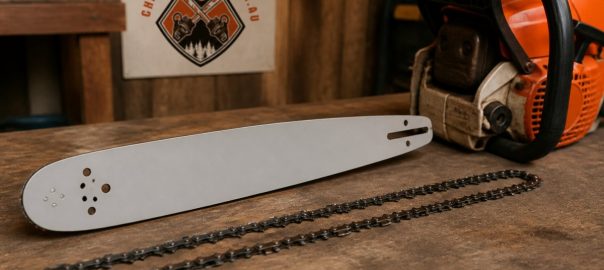
Matching the description ensures that the product aligns with its marketing materials, labels or display samples. For instance, a chainsaw bar advertised at 50 cm that measures 45 cm would fail to meet this description.
How long consumer guarantees last for a chainsaw or drill
Consumer guarantees remain active for the reasonable lifespan of the product. As noted by the ACCC regarding out-of-warranty rights, this duration is determined by the tool’s cost, durability and frequency of use. A professional-grade chainsaw will have a longer expected lifespan than a budget-tier DIY model. A manufacturer’s warranty expiry does not extinguish your statutory rights.
Major vs Minor Failure: Which Remedy You Can Choose
Distinguishing between a major and minor failure is critical, as it determines whether you or the retailer chooses the remedy. A major failure grants you the right to select a refund or replacement. A minor failure allows the seller to choose between repair, replacement or refund.
Failures are classified as major if the tool is unsafe, cannot perform its primary function, or deviates significantly from the description. Minor failures are defects that can be rectified within a reasonable timeframe without compromising the tool’s integrity.
When a seller can choose repair instead
For minor failures, the retailer may opt for a free repair. However, if the repair process is unreasonably delayed, the failure may be reclassified as major. Industry standards suggest that a ‘reasonable time’ for repair depends on the complexity of the tool and the availability of parts.
|
Failure type |
Who chooses the remedy |
What it covers |
|---|---|---|
|
Major failure |
You |
Unsafe, unfit for purpose, or does not match description |
|
Minor failure |
Seller |
Easily rectifiable defects |
Faulty Product Refund or Replacement: What the Seller Must Do
In cases of major failure, the seller must provide a refund or replacement at your discretion. They are prohibited from forcing a credit note or store voucher upon you. According to ACCC guidance on remedies, refunds must be processed in the same manner as the original payment.
Warranty versus statutory consumer guarantees
Manufacturer warranties are voluntary additions to your statutory rights. Consumer guarantees under Australian law override any warranty terms that seek to limit or exclude your rights. You are entitled to the most favourable protection available.
A note on business purchases
Tools purchased for business use may be subject to different provisions under the Australian Consumer Law, particularly regarding the definition of a ‘consumer’. Confirm your eligibility before initiating a claim.
How to Complain About a Faulty Product: Step-by-Step
Always initiate your claim with the retailer, as they hold the primary legal obligation.
- Cease operation: Immediately stop using the tool to prevent further damage or injury.
- Proof of purchase: Locate your receipt, tax invoice or bank statement.
- Document the fault: Record the specific issues and the date they occurred.
- Written communication: Send an email to the seller to create a formal record.
- Specify the remedy: Clearly state whether you are seeking a refund, replacement or repair.
- Set a deadline: Request a response within a reasonable timeframe.
- Maintain records: Keep copies of all correspondence and tracking information.
Faulty Product Complaint Letter Template and Evidence Checklist
Subject: Faulty [Model Name] – Request for remedy under Australian Consumer Law
Dear [Seller Name],
I purchased a [Model Name] from your store on [Date], order number [Number]. The tool has developed a fault: [Describe fault].
This product is not of acceptable quality. I am requesting a [Refund/Replacement/Repair].
Please respond by [Date].
Regards, [Your Name]
Power tool fault diagnosis: what to document before you call
Specific details expedite the claims process. Before contacting the seller, ensure you have documented:
- The exact nature of the fault and the date of first occurrence.
- Photographic or video evidence of the defect.
- The model and serial number.
- Details regarding fuel mix, battery health, or power source.
- Whether the tool was used in accordance with the user manual.
Faulty Product Return Shipping: Who Pays and How to Send It Back
If a product is faulty, the seller is generally responsible for return shipping costs. Contact the seller to arrange a prepaid return or to confirm reimbursement procedures before shipping. Always drain fuel and oil from chainsaws and secure them in appropriate packaging.
Batteries, Chargers and Accessories: What’s Covered
Batteries and chargers are subject to the same consumer guarantees as the primary power tool. Consumable items, such as chains or guide bars, are generally not covered for normal wear and tear, though they remain covered if a manufacturing defect exists.
Escalating a Refused Claim: Your Next Steps
If a seller refuses a valid claim, take the following steps:
- Request the refusal in writing.
- Reference the specific provisions of the Australian Consumer Law.
- Escalate the matter to the retailer’s head office.
- Lodge a formal complaint with your relevant state or territory consumer protection agency.
- Consider seeking assistance from a local civil or small claims tribunal.
This article was created with Chainsaws R US to help consumers understand their rights. For those maintaining their equipment, Chainsaws R US provides a range of parts and safety gear to keep your tools operational.