Last Updated: October 27, 2026
Quick Summary
Recycled chainsaw parts are reliable only when the part, seller and saw model line up, since reliability belongs to a specific checked component rather than to recycled as a category. Four things decide it: provenance, measured wear, fit to your exact model revision, and seller behaviour.
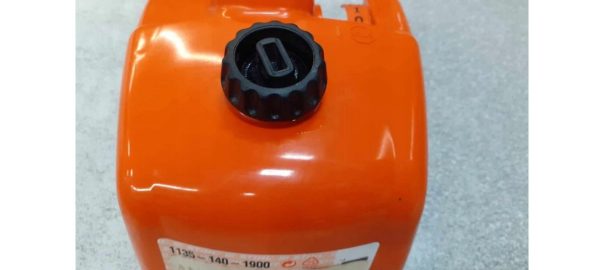
- Cylinders with unscored bores, crankcases, covers, recoil assemblies, handles, tanks and clutch covers are usually safe with inspection.
- Pistons, rings, seals, gaskets, fuel lines and carburettor diaphragms are rarely worth reusing.
- Confirm the exact model number, part number, part photo, cylinder bore and stroke, and bolt pattern before buying.
- Avoid recycled parts on high-stress components or any part where failure risks injury, such as chain brakes and AV mounts.
- Check the warranty period, returns window, who pays postage, and whether the listing shows actual condition or stock photos.
Table of Contents
- Are Recycled Chainsaw Parts Reliable? What Decides It
- Used Chainsaw Parts: Which Components Survive Reuse
- OEM vs Aftermarket Chainsaw Parts: Where Reliability Diverges
- Chainsaw Parts Compatibility: A Fitment Check Before You Buy
- How to Inspect a Recycled Part Before You Fit It
- When Recycled Parts Make Sense and When They Do Not
- Chainsaw Parts Warranty, Returns and Seller Checks
- What Most Buyers Get Wrong About Recycled Parts
- Frequently Asked Questions
Are Recycled Chainsaw Parts Reliable? What Decides It
Yes, but only when the part, seller and saw model line up. Reliability belongs to a specific checked component, not to “recycled” as a category. At Chainsaws R US, we stock new and recycled parts. Four things decide it: provenance, measured wear, fit to your exact model revision, and seller behaviour.
Used Chainsaw Parts: Which Components Survive Reuse
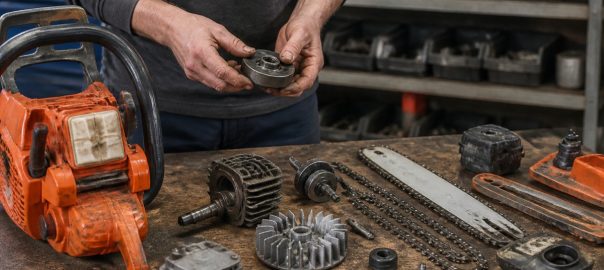
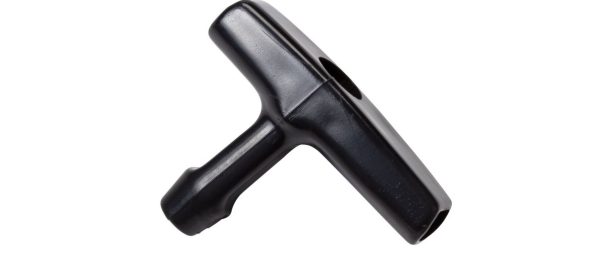
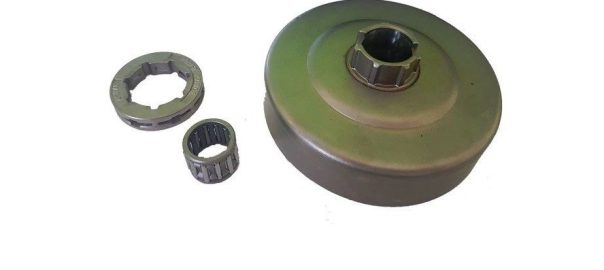
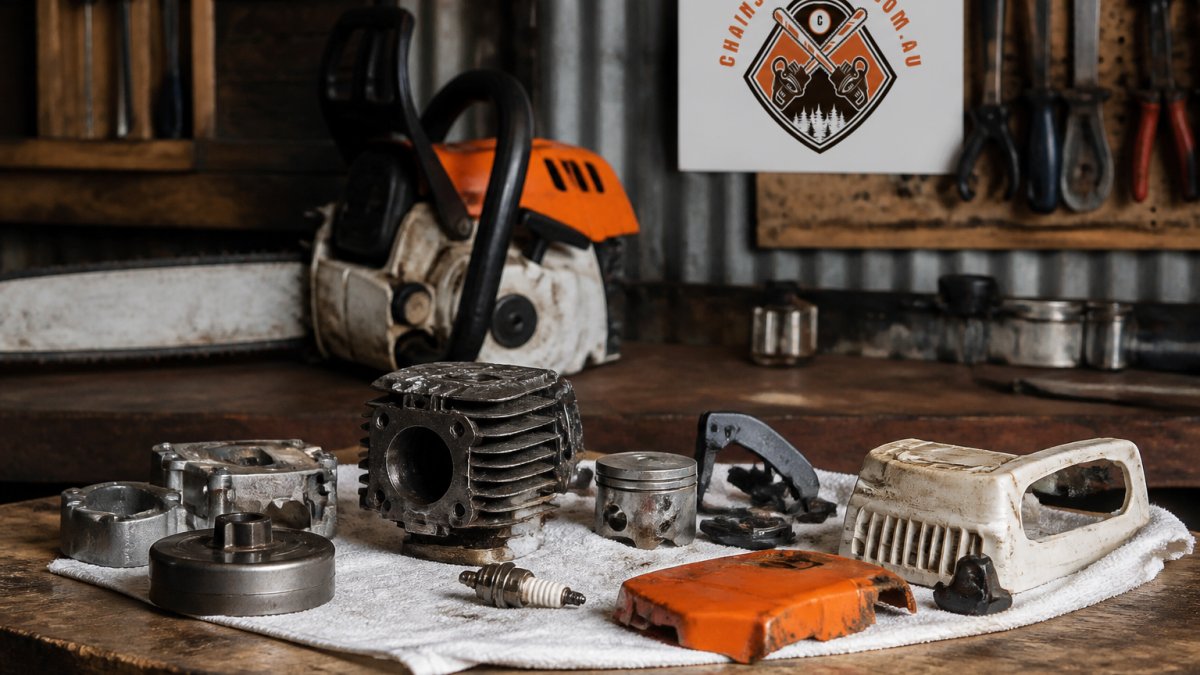
Cylinders with unscored bores, crankcases, covers, recoil assemblies, handles, tanks and clutch covers are usually safe with inspection. Crankshafts, clutches, drums and oil pumps are reusable only if measured. Pistons, rings, seals, gaskets, fuel lines and carburettor diaphragms are rarely worth reusing. For older machines, used components may be an option. Chainsaw repair parts for older models explains how to source parts when new stock is discontinued.
OEM vs Aftermarket Chainsaw Parts: Where Reliability Diverges
The OEM vs aftermarket chainsaw parts question is where most reliability arguments live. OEM parts are made to the saw maker’s drawings, so fitment and metallurgy are known, and a used OEM component has already survived real service. Aftermarket parts vary enormously. Judge both by total cost of ownership, not purchase price:
|
Factor |
Used OEM part |
Budget aftermarket part |
|---|---|---|
|
Fitment risk |
Low if matched correctly |
Variable, sometimes needs modification |
|
Known service history |
Yes, if seller documents it |
None |
|
Typical failure mode |
Wear from prior use |
Premature wear, poor plating, soft metal |
A cheap top-end kit that scores its cylinder within a few tanks costs far more in labour and downtime than it saves. Chainsaw return policy for damaged items covers what to do if a part arrives damaged or does not match expectations.
Chainsaw Parts Compatibility: A Fitment Check Before You Buy
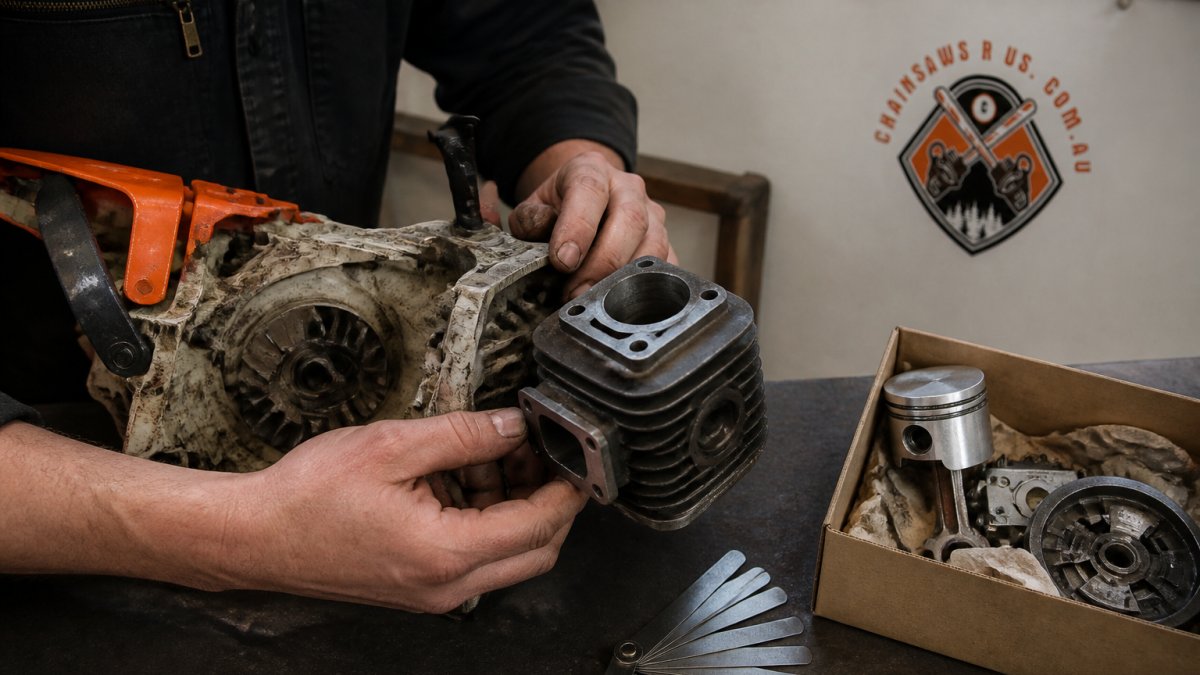
Chainsaw parts compatibility is the biggest cause of “reliable part, bad result” stories. Manufacturers change designs within the same model name, so confirm the exact model number, the part number from your saw’s illustrated parts list, an actual part photo, cylinder bore and stroke, bolt pattern and mounting points, and that the seller confirms stock physically. How to verify chainsaw part stock walks through checking that a part is genuinely in stock before you trust it.
How to Inspect a Recycled Part Before You Fit It
Inspect on the bench before anything goes near the saw. For cylinders, look for scoring, check plating for flaking near the exhaust port, and confirm the deck is flat. For pistons, check the skirt for scuffing and that the ring moves freely. For crankshafts, spin the bearings for roughness and check the big-end bearing for play. For all parts, check threads and bolt holes, confirm circlip grooves are intact, and clear debris from oilways and ports. A part that fails inspection is not a bargain, it is a future breakdown with postage attached.
When Recycled Parts Make Sense and When They Do Not
Good uses: keeping an older saw running when new OEM stock is discontinued; restoration projects; non-critical components like covers, handles and tanks; budget repairs on a backup saw. Poor uses: a saw you rely on for paid, time-critical work; high-stress components with unknown service history; any part where failure risks injury, such as chain brakes and AV mounts. For professional use, new parts on critical components and recycled parts on the rest usually wins.
Chainsaw Parts Warranty, Returns and Seller Checks
Chainsaw parts warranty terms signal how much faith a seller has in their stock. Check the warranty period and what it covers, the returns window and who pays postage, whether the listing describes actual condition or uses stock photos, and whether the seller is responsive before the sale. A seller who answers technical questions properly before you buy may be easier to deal with.
What Most Buyers Get Wrong About Recycled Parts
The biggest error is treating “recycled” as a single quality tier; reliability comes down to the individual part, its history and the checks done on it. The second is skipping fitment: a perfect part for the wrong revision is still the wrong part. The third is buying on price alone. Get those three right and recycled chainsaw parts become a sensible, cost-effective choice rather than a risk.
Frequently Asked Questions
How can you tell if a recycled chainsaw part is in good condition?
Inspect the part before fitting it. Check the cylinder bore for scoring or transfer marks, look for cracks around mounting ears, and confirm the piston skirt is not scuffed. Bearings should spin freely without grit or play, and seals should be soft rather than hardened. Ask the seller for clear photos of the bore and mating surfaces, and confirm the part number matches your saw. Cleaning and photographs alone do not establish whether a part has been inspected.
Are recycled chainsaw parts as reliable as new parts?
It depends on the component. Assess each component individually. Match the part to the risk.
Does a recycled chainsaw part come with a warranty?
Warranty terms vary by seller. Check the terms before ordering.
Reliable recycled parts come down to inspection, honest description and correct fitment, and that is exactly how we treat our stock at Chainsaws R US. We offer an extensive range of new and recycled chainsaw parts, ship Australia-wide, and back our range with a focus on value for money and satisfaction. If you are chasing a part for an older saw or want to confirm what is on the shelf, get in touch with Chainsaws R US and we will help you find the right fit.